Your Alignment Meetings Shouldn't Exist
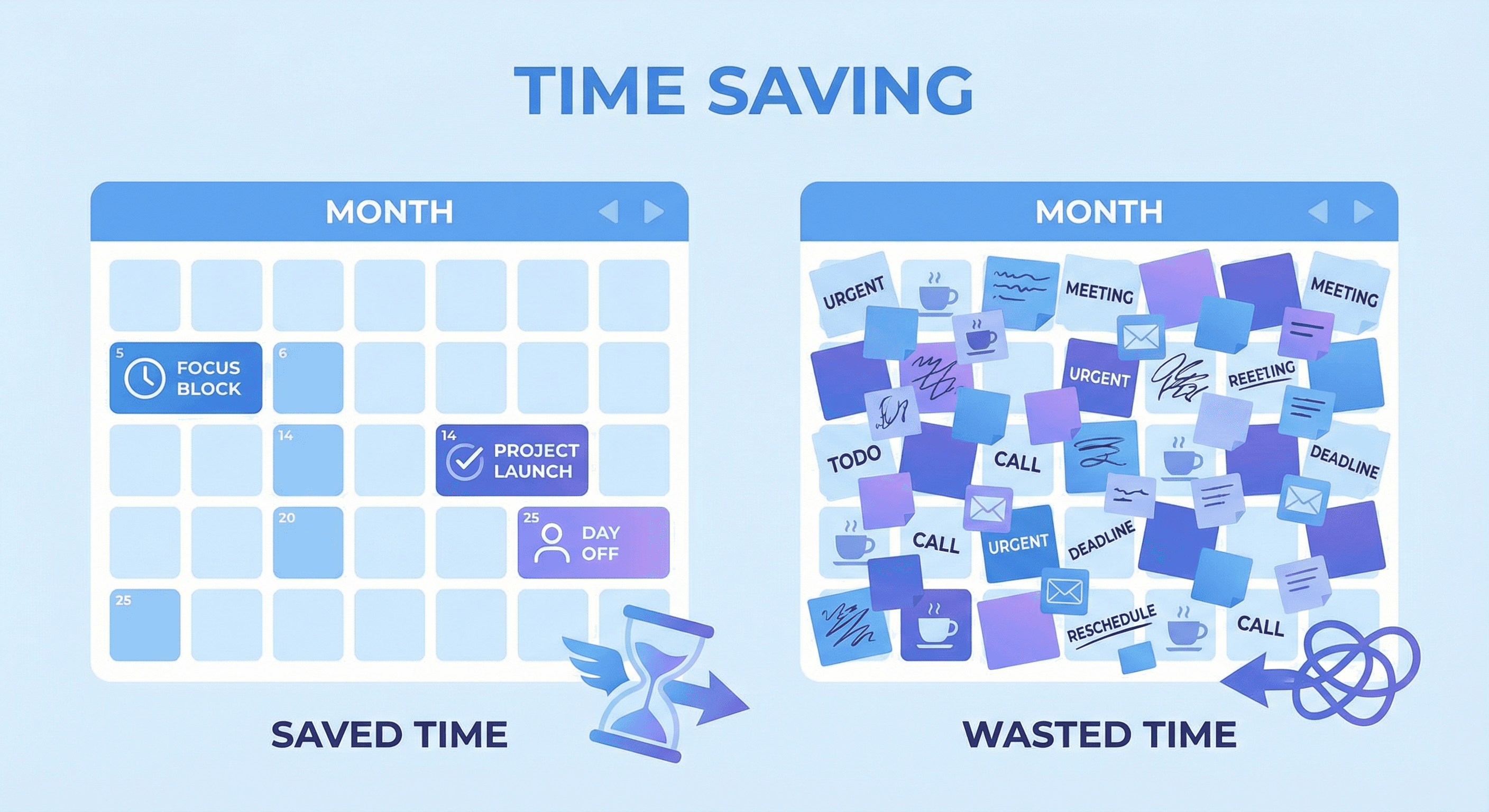
The Meeting Loop
Monday: Feature kickoff meeting. 60 minutes, 6 people, walking through the spec you already wrote.
Tuesday: Engineering asks a clarification question in Slack. You schedule a 30-minute follow-up for Wednesday.
Wednesday: Clarification meeting. Turns out the designer has concerns about the flow. Schedule another meeting for Friday with design included.
Friday: Design review meeting. The CTO joins and raises architectural questions you didn't consider. Spec needs revision.
Next Monday: Revised spec review meeting.
By the time engineering actually starts building, you've burned 11 person-hours across 5 meetings. And this is per feature.
If this pattern feels familiar, you're not alone. And you're probably exhausted.
The Real Problem
Here's what's actually happening: the spec isn't clear or complete enough to stand on its own.
Missing acceptance criteria means engineering needs clarification. No architecture consideration means the CTO has questions. Vague requirements mean the designer wants to talk through flows.
Each meeting exists because the spec has gaps. And each meeting eats the time you need to write better specs, which creates more meetings. It's a negative feedback loop.
The Math Is Brutal
Let's be conservative:
- One feature requires 3 alignment meetings
- 45 minutes average per meeting
- 5 people in each meeting
That's 11.25 person-hours of meeting time per feature.
If your team ships 8 features per quarter, that's 90 person-hours. More than two full work weeks of collective time spent in meetings that shouldn't need to exist.
Now add the context switching cost. Every meeting interrupts focused work. Every "quick sync" fragments someone's afternoon. The real cost is probably double what the calendar shows.
What Clear Specs Enable
When a spec is actually complete—business context, user stories with acceptance criteria, architecture considerations, data model implications—the dynamics change completely.
The spec review becomes a 15-minute approval
Instead of walking through every detail, stakeholders verify that nothing got missed. The meeting is confirmatory, not exploratory.
"Looks complete. Any concerns? No? Approved."
Engineering doesn't need clarification sessions
They have the context to make informed decisions. Edge cases were addressed in the spec. Architecture considerations are documented. They can start building instead of asking questions.
Mid-sprint surprises disappear
No more "wait, we didn't consider how this integrates with the existing system" discoveries on day 3. Those considerations were surfaced during spec writing.
The Structure Problem
Most PMs aren't intentionally writing incomplete specs. The problem is that without a structured flow, it's genuinely hard to remember every dimension.
You write user stories and think you're done. You forget to include acceptance criteria for the edge case. You don't think through architecture because "that's engineering's job." You don't explicitly state the business objective because "everyone knows why we're building this."
Then the meetings happen to fill in the gaps.
This is why guided spec processes produce such dramatic meeting reductions. They prompt you for:
- Business objective (so everyone understands the "why")
- Acceptance criteria (so "done" is unambiguous)
- Edge cases (so engineering doesn't discover them mid-sprint)
- Architecture context (so technical decisions are informed)
- Data model (so implementation is grounded in reality)
The structure does the remembering for you. You focus on the thinking; the tool ensures completeness.
The Confidence Shift
When your specs consistently include everything stakeholders need, trust builds.
Engineering learns to trust that your specs are buildable. They stop asking clarification questions and start building.
Design learns to trust that flows are well thought through. They stop needing separate design review meetings.
Leadership learns to trust that you've connected the work to business objectives. They stop asking "why are we building this?"
And you stop feeling like you need to be in every meeting because the spec might be missing something.
What Actually Changes
Teams that shift from review-heavy to spec-complete processes report:
60-80% reduction in alignment meetings
A feature that used to require 4-5 meetings now requires one approval meeting. The time savings compound across every feature.
Faster sprint velocity
Less time blocked waiting for clarification. Less mid-sprint rework when gaps are discovered. Work flows smoothly from spec to implementation.
More time for strategic work
The hours you get back aren't just meeting time. They're focus time. Time for user research, competitive analysis, roadmap planning—the work that actually differentiates your product.
The Meeting Test
Here's how to know if your meetings are value-add or gap-filling:
If you removed the meeting, would the work still proceed correctly?
If yes: the meeting is probably unnecessary overhead.
If no: your spec is missing something.
The goal isn't zero meetings. Collaboration is valuable. But most spec-related meetings exist to compensate for incomplete documentation, not to add value through discussion.
Start With Your Next Spec
If your calendar is full of alignment meetings, clarification sessions, and mid-sprint check-ins, the problem isn't that your team needs more communication. It's that your specs aren't complete enough to stand on their own.
FluidSpecs guides you through every dimension of a complete spec so stakeholders have the context they need without requiring meetings. Reviews become approvals, not explorations.
Try FluidSpecs free and get your calendar back →